

Introduction
There are very few travel experiences in the world where the journey itself becomes the highlight. Switzerland is one of those rare places.
Most trips are built around destinations—cities to check off, landmarks to photograph, attractions to visit. But in Switzerland, something shifts. You begin to notice that the most memorable moments aren’t always tied to where you stop, but to what you see along the way.
A train curves around a mountain, and suddenly a valley opens up below you. A quiet lake appears, reflecting snow-covered peaks. Small wooden houses sit perfectly against a backdrop of rolling green hills. And all of this unfolds slowly, without effort, as if the country is revealing itself one frame at a time.
That’s the magic of Switzerland’s scenic trains.
This one-week Switzerland scenic train itinerary is designed for travelers who want to experience the country deeply, not rush through it. It combines iconic routes like the Glacier Express and Bernina Express with thoughtfully chosen stops such as Lucerne, Interlaken, Zermatt, and St. Moritz. The goal is simple: to give you a journey that feels immersive, balanced, and unforgettable.
Whether you’re planning a honeymoon, a first-time Europe trip, or a solo escape into nature, this itinerary will help you navigate Switzerland in the most beautiful way possible—by rail.
In Short (TL;DR)
- Duration: 7 days
- Travel style: Scenic train-based itinerary
- Top routes: Glacier Express, Bernina Express, GoldenPass Line
- Key stops: Zurich, Lucerne, Interlaken, Zermatt, St. Moritz
- Ideal for: Couples, photographers, slow travelers
- Best time: May–October (lush landscapes) or December–February (snow views)
Scenic Train travel is must for all the tourists travelling Switzerland for first-timers.
Why Scenic Train Travel Works Best in Switzerland
Switzerland’s railway system is not just efficient—it’s intentionally designed to showcase the country’s landscapes. This is what makes train travel here fundamentally different from most other destinations.
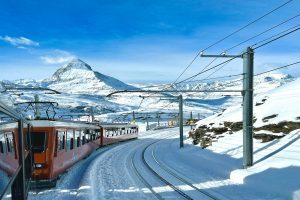
First, there’s the visual experience. Scenic trains come with oversized panoramic windows that stretch toward the ceiling, allowing you to fully absorb your surroundings. Unlike car travel, where your focus shifts between driving and navigating, trains allow uninterrupted viewing. You can sit back and watch entire landscapes unfold without distraction.
Second, there’s ease and reliability. Switzerland is known for precision, and that applies to its trains. Connections are smooth, delays are rare, and even remote mountain towns are accessible without hassle. You don’t need to plan complex routes or worry about logistics—everything is designed to flow seamlessly.
Third, there’s comfort. Long journeys like the Glacier Express are built for relaxation. Wide seats, onboard service, and a calm atmosphere make even an eight-hour ride feel effortless.
And finally, there’s sustainability. Train travel is one of the most environmentally friendly ways to explore Switzerland, aligning with the country’s strong focus on eco-conscious tourism.
Your 7-Day Switzerland Scenic Train Route Overview
Explore ultimate Switzerland itinerary for 7 days :
- Day 1: Arrival in Zurich
- Day 2: Zurich to Lucerne
- Day 3: Lucerne to Interlaken via GoldenPass Line
- Day 4: Interlaken to Zermatt
- Day 5: Glacier Express (Zermatt to St. Moritz)
- Day 6: Bernina Express (St. Moritz to Tirano)
- Day 7: Return via Chur
Each leg is chosen to balance travel time with meaningful experiences.
Day 1: Arrival in Zurich – Settling Into Switzerland
Zurich is often treated as a transit city, but spending time here helps you ease into the rhythm of Switzerland.
The city feels calm, organized, and quietly sophisticated. Unlike larger European capitals, Zurich doesn’t overwhelm you—it invites you to slow down.
Start your exploration in the Old Town (Altstadt). The streets here are narrow and winding, lined with historic buildings, boutique shops, and cafés. It’s the kind of place where you don’t need a plan—just walking is enough.
From there, head toward Lake Zurich. The promenade is perfect for a relaxed evening walk. Locals gather here, especially during sunset, giving you a glimpse into everyday life.
If you’re interested in shopping or simply observing the city’s upscale side, walk along Bahnhofstrasse, one of the world’s most exclusive shopping streets.
Food-wise, keep it simple on your first day. Try Swiss chocolate, a cheese platter, or rösti—a classic potato dish that’s both comforting and filling.
Where to stay: Choose accommodation near Zurich HB (main station). This makes your onward train journey effortless the next morning.
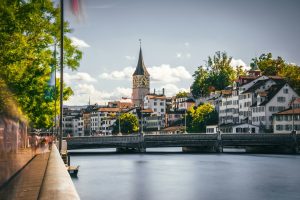
Day 2: Zurich to Lucerne – First Glimpse of the Alps
The train from Zurich to Lucerne takes just about an hour, but the transition in scenery is noticeable.
Lucerne feels like Switzerland distilled into one town. It has everything—mountains, a lake, historic architecture, and a slower pace of life.
One of the first landmarks you’ll encounter is the Chapel Bridge (Kapellbrücke), a wooden bridge that dates back to the 14th century. It’s simple but iconic, and it sets the tone for the town.
A short walk away is the Lion Monument, carved into a rock face. It’s a quiet, reflective spot that contrasts with the otherwise cheerful atmosphere of Lucerne.
The real highlight, however, is Lake Lucerne. Taking a boat ride here gives you a completely different perspective of the surrounding mountains. The water is calm, the air is fresh, and the views feel almost surreal.
If you have extra time, consider a half-day trip to Mount Pilatus or Mount Rigi. Both offer panoramic alpine views, but they differ slightly in experience—Pilatus feels more dramatic, while Rigi is calmer and more scenic.
By evening, Lucerne becomes even more peaceful. Walking along the lake during sunset is one of those moments that stays with you long after the trip ends.
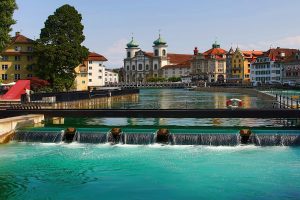
Day 3: Lucerne to Interlaken – The GoldenPass Scenic Line
This is where your journey starts to feel distinctly “Swiss.”
The GoldenPass Line connects Lucerne to Interlaken and is known for its varied landscapes. As the train moves forward, you’ll notice how quickly the scenery changes.
You pass through green meadows where cows graze quietly, small villages with wooden chalets, and lakes that appear suddenly between hills. It’s not dramatic in a single moment—it’s beautiful in a continuous, evolving way.
Arriving in Interlaken
Interlaken sits between two lakes—Lake Thun and Lake Brienz—and is surrounded by mountains. It’s more lively than Lucerne, with a stronger focus on outdoor activities.
One of the best viewpoints here is Harder Kulm. A short funicular ride takes you up to a platform where you can see the entire region spread out below you.
Another must-visit is Lauterbrunnen Valley, often described as one of the most beautiful valleys in Europe. With waterfalls cascading down steep cliffs, it feels almost unreal.
If you prefer something relaxed, take a boat ride on Lake Brienz. The turquoise water and mountain reflections create a peaceful atmosphere.
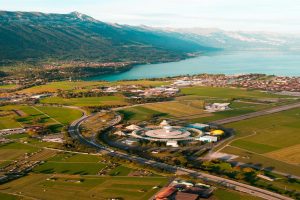
Day 4: Interlaken to Zermatt – Entering the High Alps
The journey to Zermatt takes you deeper into the mountains.
Zermatt is unique for one simple reason—it’s completely car-free. This immediately changes the atmosphere. The air feels cleaner, the streets are quieter, and the entire town has a more peaceful energy.
The main attraction here is the Matterhorn, one of the most recognizable mountains in the world. Seeing it in person is a different experience altogether—it feels larger and more dramatic than photos suggest.
To get the best view, take the Gornergrat Railway, a scenic train that climbs to a high vantage point overlooking the mountain.
You can also visit Matterhorn Glacier Paradise, the highest cable car station in Europe.
In the evening, enjoy a traditional Swiss meal—fondue or raclette are both excellent choices, especially in a mountain setting.
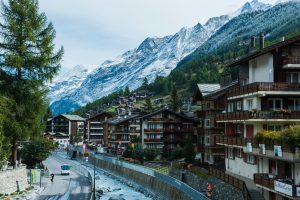
Day 5: Glacier Express – The Most Iconic Scenic Train
This is the highlight of your itinerary.
The Glacier Express runs from Zermatt to St. Moritz and takes around eight hours. It’s often called the “slowest express train in the world,” but that’s exactly what makes it special.
The journey is not about speed—it’s about immersion.
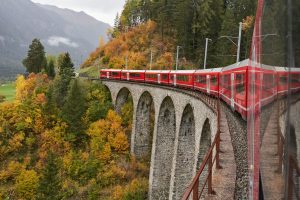
As the train moves through valleys, over bridges, and through tunnels, you’ll witness some of the most diverse landscapes in Switzerland. One moment you’re passing through dense forests, and the next you’re crossing open alpine plains.
One of the standout sections is the Rhine Gorge, often referred to as the Swiss Grand Canyon. The scale and color of the landscape here are striking.
The train itself is designed for comfort, with large windows and a calm, quiet atmosphere.
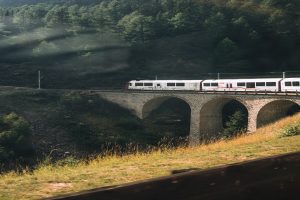
Day 6: Bernina Express – A Journey Across Borders
The Bernina Express offers something completely different.
This route takes you from the Swiss Alps into Italy, and the transition in scenery is dramatic.
You start with glaciers and snow-covered peaks, then gradually move into greener landscapes, and finally reach a more Mediterranean environment.
One of the highlights is the Brusio Spiral Viaduct, a circular railway bridge that feels almost surreal when seen in motion.
At the end of the journey, you arrive in Tirano, a small Italian town where you can enjoy authentic Italian food and a more relaxed atmosphere.
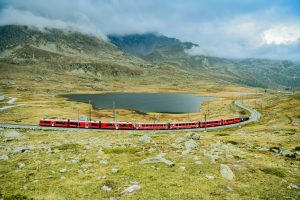
Day 7: Return via Chur – A Quiet Ending
Chur, Switzerland’s oldest town, is a calm and charming place to end your journey.
Its Old Town is small but full of character, with narrow streets and historic buildings. It’s the kind of place where you can simply walk, sit in a café, and reflect on your trip.
From here, you can easily return to Zurich.
Budget Breakdown (Realistic)
- Swiss Travel Pass: ₹30,000–₹45,000
- Hotels: ₹8,000–₹25,000 per night
- Food: ₹3,000–₹6,000 per day
- Activities: ₹5,000–₹15,000
To make your vacation affordable and budget-friendly, explore the Switzerland budget travel guide.
Best Time to Visit
- Summer: Green landscapes, clear views
- Winter: Snow-covered scenery, festive atmosphere
To learn in depth, explore the best time to visit Switzerland
FAQs
What is the best scenic train in Switzerland?
The Glacier Express is the most iconic.
Is the Swiss Travel Pass worth it?
Yes, especially for multiple train journeys.
Conclusion
Switzerland isn’t a place you rush through. It’s a place you move through slowly, where every journey becomes part of the experience.
This itinerary is designed to help you do exactly that—to see, feel, and remember Switzerland in the most immersive way possible.
Plan your journey with The Tarzan Way and create a Switzerland travel itinerary that goes beyond just destinations.