


Most people who travel across India never make it up here. That’s part of what makes Northeast India worth the extra effort – eight states, one region, and an almost absurd range of landscapes packed into it: snow-dusted peaks, lakes so still they double as mirrors, root bridges grown by hand over generations, wildlife reserves, and tribal cultures that have held onto their own rhythms far from the usual tourist circuit.
Tourism here has been picking up steadily, partly because more people are looking for trips that don’t feel mass-produced. Whether you’ve got a long weekend or three weeks to spare, here’s the best Northeast India itinerary to visit in 2026 and why now is a good time to go.
1. Tawang, Arunachal Pradesh
Tawang sits above 10,000 feet, tucked between Himalayan peaks, and it feels like it. The town is anchored by Tawang Monastery — the largest in India and one of the most significant Buddhist sites anywhere. Beyond the monastery, Sela Pass, Madhuri Lake, and Bum La Pass (right near the India-China border) are all worth the detour.
Go between: March–May or September–November
Why now: Roads into Tawang have improved noticeably, and the tourism infrastructure is finally starting to catch up with the scenery.
2. Shillong, Meghalaya
People call Shillong the “Scotland of the East,” and once you’re there — cool air, rolling green hills, waterfalls tucked into every valley — it’s easy to see why. It also happens to have a genuinely good live music scene, which isn’t something you’d necessarily expect.
Umiam Lake, Elephant Falls, Shillong Peak, and Laitlum Canyon are the standard stops, and all of them earn their reputation.
Go between: October–April
Do this: Spend an evening drifting between cafés and catching a live set, it’s one of the better ways to get a feel for the city.
3. Sohra (Cherrapunji), Meghalaya
Cherrapunji holds the title for one of the wettest places on Earth, but reducing it to rainfall statistics misses the point. This is where you’ll find the living root bridges — footbridges grown from rubber tree roots over decades — along with Nohkalikai Falls, Seven Sisters Falls, and the famous Double Decker root bridge trek.
Go between: October–May
What makes it different: Few places anywhere combine raw adventure, dense nature, and this kind of quiet human ingenuity in one trip.
Visit: Most Instagrammable Places in Northeast India
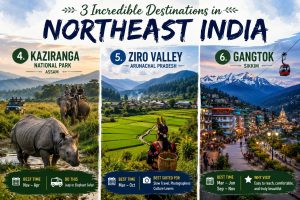
4. Kaziranga National Park, Assam
Kaziranga is a UNESCO World Heritage Site and home to the largest population of one-horned rhinoceroses left in the world. It’s not just rhinos, either — elephants, wild buffalo, swamp deer, and Bengal tigers all roam the park.
Go between: November–April
Do this: A jeep or elephant safari gets you close enough to actually see the animals, not just spot them from a distance.
5. Ziro Valley, Arunachal Pradesh
If you want quiet, Ziro delivers it. The valley is ringed by hills and carpeted in rice paddies, and it’s home to the Apatani tribe, known for farming practices that were sustainable long before the word became fashionable. Once a year, the valley also hosts the Ziro Music Festival, one of India’s better-known outdoor festivals.
Go between: March–October
Best suited for: Travelers who want to slow down : photographers, culture-focused trips, anyone not in a rush.
6. Gangtok, Sikkim
Gangtok manages a rare balance — real mountain scenery paired with the comforts of a proper city. As Sikkim’s capital, it has markets, monasteries, and enough adventure options to fill a week, alongside sights like Tsomgo Lake, Nathula Pass, Rumtek Monastery, and MG Marg.
Go between: March–June or September–November
Why people keep coming back: It’s an easy entry point into the Northeast : comfortable, accessible, and still genuinely beautiful.
Explore: 13 Unique things to do in Sikkim
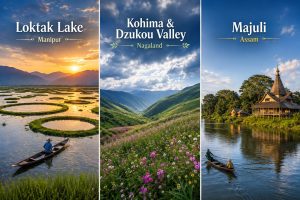
7. Loktak Lake, Manipur
Loktak is unlike anything else in India. Its surface is dotted with phumdis, floating islands of vegetation, which give the whole lake a strange, almost otherworldly quality. Nearby, Keibul Lamjao National Park is the only floating national park on Earth, and it’s the last home of the endangered Sangai deer.
Go between: October–March
Worth doing: Take a boat out across the floating islands — there’s genuinely nowhere else you can do this.
8. Kohima and Dzukou Valley, Nagaland
Nagaland pairs deep tribal heritage with some of the best trekking in the country. Kohima, the state capital, carries a lot of history. Dzukou Valley, meanwhile, is routinely ranked among India’s most beautiful treks — and during flowering season, it turns into something close to a wildflower carpet.
Go between: October–May
Don’t skip: The Hornbill Festival often called the “Festival of Festivals”, which brings together Nagaland’s many tribal traditions in one place.
9. Majuli, Assam
Majuli, set in the Brahmaputra River, is the largest inhabited river island in the world. It’s a genuine cultural hub, Vaishnavite monasteries, traditional dance forms, handicrafts, and a slower pace of rural life that’s increasingly rare to find.
Go between: October–March
Best for: Travelers after something off the well-worn path, with real cultural depth to it.
10. Mechuka, Arunachal Pradesh
Mechuka is about as hidden as it gets. This remote valley near the Indo-China border has sweeping mountain views, small unhurried villages, and a stillness that’s hard to find elsewhere. It’s gaining a reputation, but it hasn’t been overrun yet.
Go between: October–April
Why go: It’s one of the most rewarding corners of the Northeast — genuinely untouched scenery paired with culture that hasn’t been packaged for tourists.
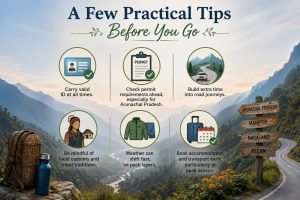
A Few Practical Tips Before You Go
1. Carry valid ID at all times.
2. Check permit requirements ahead of time, especially for Arunachal Pradesh.
3. Build extra time into road journeys, they tend to run longer than maps suggest.
4. Be mindful of local customs and tribal traditions.
5. Weather can shift fast, so pack layers.
6. Book accommodation and transport early, particularly in peak season.
Discover: 8 Things You Shouldn’t Miss on Your Northeast India Trip
Final Thought
Tourism in the Northeast is growing fast, but the region still feels far less crowded and far more personal than most of India’s well-trodden routes. Whether you’re chasing wildlife, waterfalls, mountain treks, or just a slower kind of travel, there’s a lot here worth the trip.
If you’d rather not plan it all yourself, The Tarzan Way puts together custom itineraries built around your interests, pace, and budget.
Frequently Asked Questions
1. Which state is best for a first trip to Northeast India?
Meghalaya is a strong starting point — waterfalls, caves, root bridges, and better connectivity than most of the region.
2. Is Northeast India safe to travel?
Generally, yes. It’s still worth checking current travel advisories and taking normal precautions.
3. When’s the best time to visit in Northeast India?
October through April tends to offer the most reliable weather for sightseeing and outdoor activities.
4. Do I need a permit to travel in Northeast?
Indian citizens need an Inner Line Permit (ILP) for states like Arunachal Pradesh. Check current requirements before you finalize plans.
5. How long should a trip be?
10–15 days gives you enough time to cover a few states without rushing.
6. What’s the most offbeat spot on the list of Northeast destinations?
Mechuka, hands down.