


Introduction
Paris is often described as a city of romance, art, and timeless beauty—but those words, as familiar as they sound, don’t quite prepare you for what it actually feels like to be there.
Because Paris isn’t just about landmarks. It’s about moments.
It’s the quiet clink of coffee cups in a morning café. The golden glow of street lamps reflecting off the Seine at dusk. The way a simple walk turns into an experience because every street seems to hold history, texture, and life all at once.
And yet, there’s a paradox.
Paris invites you to slow down—but most travelers arrive with limited time.
So how do you experience a city like this in just four days without turning it into a rushed checklist? How do you see the Eiffel Tower, explore world-class museums, take a day trip to Versailles, and still leave room for wandering, for pausing, for simply being in Paris?
That’s exactly what this itinerary is designed to solve.
This 4-day Paris travel itinerary with a day trip to Versailles and a dedicated Montmartre exploration is built not just around places, but around flow. It balances iconic experiences with quieter discoveries, ensuring you don’t just see Paris—you feel it.
In Short (TL;DR)
- Duration: 4 days
- Style: Premium, slow-paced city experience
- Highlights: Eiffel Tower, Louvre, Seine, Versailles, Montmartre
- Ideal for: First-time visitors, couples, culture lovers
- Stay area: Central Paris (Le Marais or Saint-Germain)
- Best time: April–June or September–October
Understanding Paris Before You Begin
Before diving into the itinerary, it helps to understand how Paris works.
The city is divided into arrondissements (districts), arranged in a spiral pattern. While this might sound confusing at first, it actually makes planning easier—each area has its own personality.
Paris is also incredibly walkable. Yes, the metro is efficient, but some of your best experiences will come from simply walking between places. Distances that seem long on a map often feel short when the journey is filled with cafés, bakeries, and unexpected views.
Most importantly, Paris rewards those who don’t rush. Trying to “do everything” often leads to exhaustion and missed moments. This itinerary avoids that by giving each day a clear theme and natural pacing.
Where to Stay in Paris (Setting the Tone for Your Trip)
Where you stay in Paris will shape your experience more than you expect.
If this is your first visit, choose a neighborhood that allows you to step out and immediately feel connected to the city.
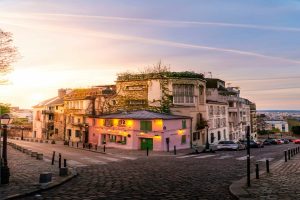
Le Marais is one of the best choices. It’s central, lively, and full of character. You’ll find boutique shops, art galleries, and excellent cafés within walking distance.
Saint-Germain-des-Prés, on the Left Bank, offers a more classic Parisian atmosphere. It’s quieter, slightly more refined, and ideal if you imagine yourself sitting in a café with a book and coffee.
Both areas allow you to explore Paris on foot while staying well-connected to major attractions.

Day 1: First Impressions – The Paris You’ve Always Imagined
Your first day in Paris should feel cinematic.
Not rushed, not overwhelming—but memorable from the very first moment.
Morning: Meeting the Eiffel Tower
Start your day early and head toward the Eiffel Tower.
No matter how many times you’ve seen it in photos, the first real view always feels different. There’s a scale to it, a presence, that’s hard to capture until you’re standing beneath it.
Arriving early means fewer crowds and softer morning light—perfect for taking it in without distraction.
If you choose to go up, take your time. Don’t rush through the experience. Look out across the city and let it sink in—this is Paris, and this is just the beginning.
Late Morning: Walking Along the Seine
From the Eiffel Tower, begin walking along the Seine.
This is where the city starts to reveal its rhythm. You’ll pass bridges, riverside stalls selling books and prints, and locals sitting by the water.
There’s no need to hurry. In fact, the slower you walk, the more you’ll notice.
Afternoon: The Louvre & A Shift in Pace
By midday, head toward the Louvre.
It’s massive—far too large to “complete”—so don’t try. Instead, approach it with intention. Choose a few key works, wander through a couple of sections, and allow yourself to simply absorb the scale of it all.
The glass pyramid outside, the courtyards, the long corridors—it’s as much about the space as the art.
Afterward, step into the Tuileries Garden. Sit by one of the fountains. Watch people pass by. This pause is just as important as the museum itself.
Evening: Paris from the Water
As evening approaches, take a Seine river cruise.
Seeing Paris from the water changes your perspective. Landmarks pass by slowly, illuminated as the sky shifts from gold to deep blue.
It’s calm, reflective, and quietly beautiful.
End your night in Saint-Germain with a relaxed dinner. Sit outside if the weather allows. Order something simple, and let the day settle.

Day 2: Culture, Texture & the Real Paris
If Day 1 was about iconic Paris, Day 2 is about understanding its character.
Morning: Musée d’Orsay – Art That Feels Alive
Start your day at the Musée d’Orsay.
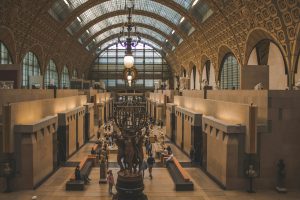
Compared to the Louvre, it feels more approachable. The building itself—a former railway station—adds a sense of openness.
Here, art feels less distant. The Impressionist works capture moments, light, and everyday life in a way that’s easier to connect with.
Take your time moving through the galleries. There’s no rush.
Late Morning: The Latin Quarter
Step out into the Latin Quarter.
This area feels alive in a different way—slightly chaotic, full of students, bookstores, and narrow streets.
Find a small café. Sit down. Order coffee. Watch people.
This is where Paris starts to feel personal.
Afternoon: Notre-Dame & Sainte-Chapelle
Walk toward Notre-Dame.
Even from the outside, it carries a sense of history and resilience. Spend a few minutes here, not just looking, but observing the details.
Then visit Sainte-Chapelle.
Inside, the stained glass transforms the space. Light filters through in colors that feel almost unreal. It’s one of those places that surprises you—not because it’s large, but because of how it feels.
Evening: Le Marais – Modern Meets Historic
Spend your evening in Le Marais.
This neighborhood blends old and new effortlessly. You’ll find centuries-old buildings alongside modern boutiques and cafés.
Walk without a plan. Stop when something catches your attention.
Try desserts here—Paris does them exceptionally well.
Day 3: Versailles – A Step Into Royal France
Morning: Journey to Versailles
Take an early train. The journey is short, but arriving early makes a big difference.
As you approach the palace, the scale becomes apparent. It’s not subtle—it’s meant to impress.
Inside the Palace
Walk through the rooms slowly.
The Hall of Mirrors stands out, but don’t rush past the smaller rooms. Each one tells a story of how life once was—opulent, structured, and distant from ordinary reality.
The Gardens – Where Time Slows Down
Step outside into the gardens.
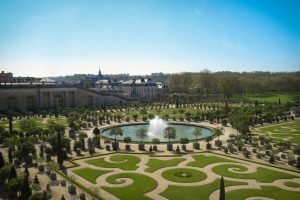
This is where Versailles becomes more than a palace. The scale is immense, but it’s also peaceful.
Walk along the paths. Sit by the water. Or rent a bike and explore further.
This part of the experience is often underestimated—but it’s where you truly feel the space.
Evening: Return & Reset
Head back to Paris in the evening.
Keep the night simple. After a long day, a quiet dinner or even takeaway works perfectly.
Day 4: Montmartre – The Soul of Old Paris
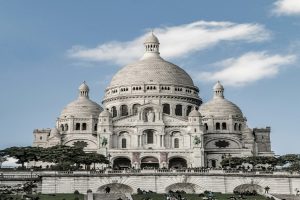
Morning: Climbing to Sacré-Cœur
Start early and head to Montmartre.
Climb up to Sacré-Cœur. The view from here is one of the best in Paris.
But more than the view, it’s the atmosphere. Musicians, artists, locals—it feels alive in a different way.
Midday: Wandering Without a Plan
Montmartre is not meant to be rushed.
Walk through its streets. Let yourself get slightly lost.
You’ll find:
- Small art studios
- Quiet cafés
- Hidden corners that feel untouched
This is where Paris feels most intimate.
Afternoon: Small Discoveries
Visit the Wall of Love. Stop at a bakery. Sit somewhere quiet.
These moments won’t appear in guidebooks—but they’ll stay with you.
Final Evening: Saying Goodbye to Paris
End your trip the way Paris is best experienced—slowly.
Find a café. Sit outside. Order something simple.
Watch the city move around you.
And just take it in.
Food in Paris: What You Shouldn’t Miss
Paris is as much about food as it is about culture.
- Fresh croissants in the morning
- Warm crepes from a street vendor
- Rich French onion soup
- Delicate macarons
The key is not to over-plan meals. Instead, stay open to what you find along the way.
Read more about: France beyond Paris
Budget Breakdown (4 Days)
- Stay: ₹10,000–₹30,000 per night
- Food: ₹3,000–₹7,000 per day
- Attractions: ₹8,000–₹15,000
- Transport: ₹2,000–₹5,000
Common Mistakes to Avoid
- Overpacking your itinerary
- Trying to see too many museums
- Ignoring neighborhoods
- Not taking time to sit and observe
FAQs
Is 4 days enough for Paris?
Yes, if you balance sightseeing with slow exploration.
Is Versailles worth it?
Absolutely—it adds depth to your Paris experience.
Conclusion
Paris is not a city you “complete.” It’s a city you experience, one moment at a time.
Even in four days, it leaves an impression that stays with you—through its streets, its sounds, and its quiet details.
This itinerary isn’t about seeing everything. It’s about seeing enough—and feeling even more.
Plan your journey with The Tarzan Way, and create a Paris itinerary that stays with you long after you’ve left.