

Document

Rajasthan Hidden Gems: A Guide Beyond the Famous Palaces

Introduction — Khamma Ghani, Explorers!

“Khamma Ghani! Welcome to the Land of Kings.”

When you close your eyes and think of Rajasthan, what do you see? Perhaps it’s the golden silhouette of the Jaisalmer Fort, the romantic shimmering waters of Lake Pichola in Udaipur, or the pink hues of Jaipur’s Hawa Mahal. These are the icons—the palaces that steal the spotlight and dominate the Instagram feeds. And rightfully so; they are magnificent.

But Rajasthan is more than just a royal postcard. It is a vast, arid tapestry woven with stories that live in the shadows of these palaces. It is found in the silence of a haunted village, the geometric perfection of an ancient water tank, the call of a migratory bird in a wetland, and the spice-laden breeze of a narrow bazaar in a desert outpost.

We are diving deep into the heart of India today. We are venturing off the beaten path with this definitive guide to Rajasthan’s Hidden Gems. We will unlock the secrets of this magical region, moving beyond the tourist traps to reveal the authentic, raw, and awe-inspiring side of the desert state.

With the immersive storytelling journeys brought to life by The Tarzan Way, you can navigate these offbeat trails safely, ensuring your trip is as legendary as the land itself.

1. Hidden Gems in Jodhpur: Beyond the Blue City

JodhpurCredit: Unsplash

Jodhpur, the Blue City, is globally famous for the imposing Mehrangarh Fort that looms over the skyline. Most tourists visit the fort, take a photo in the blue streets of Brahmapuri, and leave. But to truly understand Jodhpur, you must look down, not just up.

Toorji Ka Jhalra: The Submerged Secret

While the palaces touch the sky, Jodhpur’s soul lies in its water. Toorji Ka Jhalra is an 18th-century Stepwell (Baori) that was built by a Queen, Maharaja Abhay Singh’s consort, in the 1740s. For decades, it was submerged under debris and forgotten. Recently restored, it is now a stunning architectural wonder.

  • The Architecture: It features intricate sandstone carvings of dancing elephants, medieval lions, and cow-shaped water spouts. The geometric pattern of the steps leading down to the emerald water is mesmerizing.
  • The Vibe: Today, the stepwell is a hip urban space. It is surrounded by chic cafes and shops (like the Stepwell Cafe), making it the perfect spot to sit, sip chai, and watch local kids dive into the cool waters—a tradition that has survived for centuries.

Rao Jodha Desert Rock Park

Just a stone’s throw from the fort lies a reclaimed wasteland that is now an ecological miracle. Created in 2006 to restore the natural ecology of the rocky wasteland next to the fort, this park is home to unique volcanic rock formations (rhyolite) and native desert flora.

  • Why Visit: It offers the best, uncrowded view of Mehrangarh Fort and is a haven for naturalists.

2. Bikaner: The Red City’s Cultural Tapestry

Bikaner, IndiaCredit: Unsplash

Often overshadowed by Jaipur and Jodhpur, Bikaner is a city of raw beauty and dust-swirled history. It is a city that demands you get your hands dirty and your taste buds active.

The Rampuria Havelis

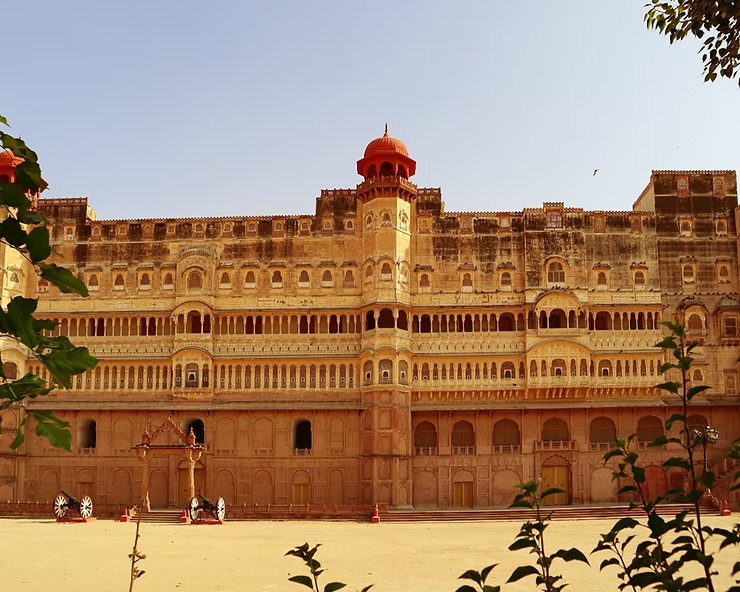
While the Junagarh Fort is impressive because it was never conquered, the real charm of Bikaner lies in its merchant mansions. The Rampuria Havelis are the pride of Bikaner. Built by wealthy merchants of the Rampuria family, these structures are made of red Dulmera sandstone.

  • The Architecture: They are a unique fusion of Victorian, Mughal, and Rajput styles. The intricate Jali (lattice) work on the stone is so fine it looks like lace. Walking these narrow lanes feels like walking through an open-air museum.

Karni Mata Temple (The Rat Temple)

Located in Deshnoke, 30km from Bikaner, this is perhaps the most “offbeat” experience in India. It is dedicated to Karni Mata, an incarnation of Durga.

  • The Shock Factor: The temple is home to approximately 25,000 black rats. They are revered, fed, and protected. These rats are believed to be the reincarnated ancestors of the Charan clan.
  • The Legend: If you spot a white rat (there are only a few), it is considered extremely lucky. It is a challenge to your comfort zone, but a profound look into the diversity of faith in Rajasthan.

The Gastronomy

You cannot leave Bikaner without visiting the local markets on Station Road. This is the birthplace of Bikaneri Bhujia (a spicy moth bean snack). Watch it being made in giant woks right on the street.

3. Abhaneri: The Geometry of Water

Chand BaoriCredit: Unsplash

Located on the Jaipur-Agra highway, many travelers zip past the dusty village of Abhaneri without realizing they are missing one of India’s deepest secrets.

Chand Baori

Built over a thousand years ago (8th-9th Century AD), Chand Baori is one of the deepest and largest stepwells in the world.

  • The Spectacle: It consists of 3,500 narrow steps arranged in perfect symmetry, descending 20 meters (13 stories) to the bottom of the well. It was designed to conserve water in the desert heat and keep it 5-6 degrees cooler than the surface.
  • The Visual: The play of light and shadow on the maze-like steps creates a visual effect that is Escher-esque. It is hauntingly beautiful and was featured in movies like The Dark Knight Rises.
  • Harshat Mata Temple: Just adjacent to the well is the ruin of a temple dedicated to the Goddess of Joy. Though damaged by invaders centuries ago, the remaining sculptures are exquisite examples of medieval India.

4. Keoladeo National Park: A Birdwatcher’s Paradise

Keoladeo National ParkCredit: Unsplash

Rajasthan isn’t just a desert; it is also a wetland. Formerly known as the Bharatpur Bird Sanctuary, Keoladeo National Park is a UNESCO World Heritage Site that offers a complete change of pace.

The Cycle Rickshaw Safari

Unlike the tiger safaris of Ranthambore, where you are in a noisy jeep, Bharatpur is best explored in silence.

  • The Experience: You can rent a bicycle or hire a cycle rickshaw. The rickshaw pullers here are trained naturalists and have been doing this for generations. They carry binoculars and can spot a bird miles away.
  • The Wildlife: It hosts thousands of birds, especially during the winter migration. From the massive Sarus Crane (the world’s tallest flying bird) to Painted Storks, Owls, and Eagles, it is a cacophony of nature. It is a serene, green lung in the middle of the arid state.

5. Ranakpur: A Symphony in Marble

RanakpurCredit: Unsplash

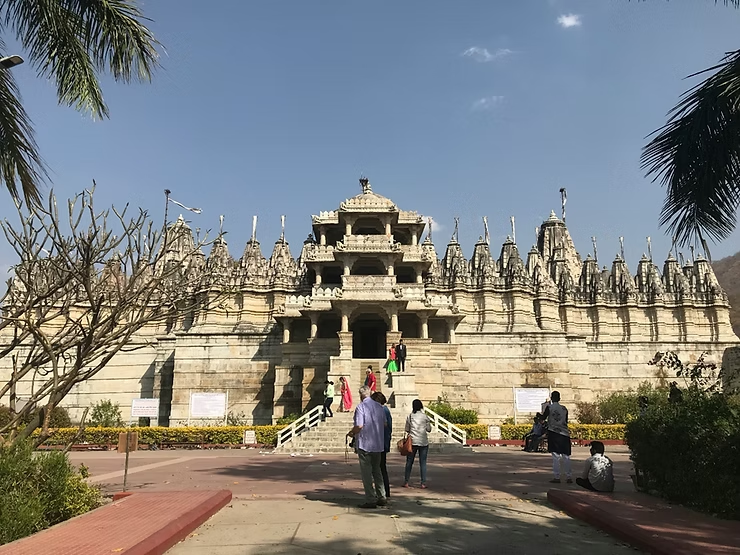
Tucked away in a remote valley of the Aravalli range, surrounded by dense forests, lies one of the most important and beautiful Jain temples in the world.

The Chaturmukha Dharana Vihara

As you approach this architectural masterpiece, you are greeted by a symphony of intricate carvings that seem to dance on the walls. The temple, built in the 15th century and dedicated to Adinatha (the first Tirthankara), is a marvel of engineering.

  • The 1,444 Pillars: The temple is supported by 1,444 marble pillars. The mind-blowing fact? No two pillars are carved the same. Each one is unique.
  • The Light: The temple is designed in a way that natural light shifts throughout the day, changing the color of the marble from gold to creamy white to blue-grey.
  • The Vibe: Unlike the crowded temples of major cities, Ranakpur is a sanctuary of peace. The only sound is the wind in the trees and the chanting of the priests.
  • Sadri Village: The nearby village offers a glimpse into the life of the Rabari tribe, known for their distinct red turbans and heavy silver jewelry.

6. Kumbhalgarh: The Great Wall of India

KumbhalgarhCredit: Unsplash

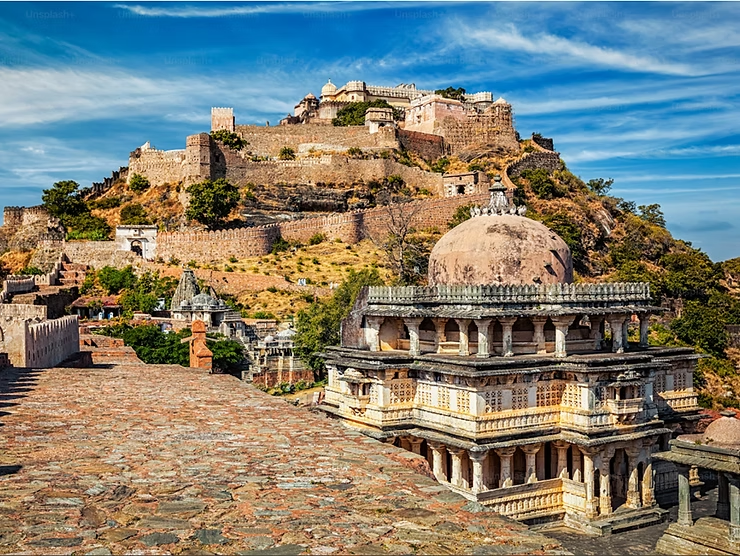
Prepare to step into the realm of legends. While Chittorgarh gets the fame for its size, Kumbhalgarh Fort is the impregnable beast of Mewar.

The Wall

Did you know that Rajasthan has the second-longest continuous wall in the world, after the Great Wall of China? The walls of Kumbhalgarh stretch for 36 kilometers through the Aravalli mountains.

  • The History: Built by Rana Kumbha in the 15th century, this fort was never conquered in battle (it was only taken once due to a water shortage). It is the birthplace of the legendary warrior, Maharana Pratap.
  • The Climb: The fort is built on a hilltop 1,100 meters above sea level. The climb to the top palace (Badal Mahal or Palace of Clouds) offers a view that extends all the way to the sand dunes of the Thar Desert on a clear day.
  • The Experience: Stay back for the evening Light and Sound show. Seeing the snake-like wall illuminated against the black mountain sky is an unforgettable sight.

7. Bundi: The Town Time Forgot

BundiCredit: Unsplash

If you want to see what Rajasthan looked like 200 years ago, go to Bundi. Located in the Hadoti region, Bundi is often skipped by the standard tour buses, which have preserved its blue-washed charm.

Taragarh Fort & Garh Palace

Rudyard Kipling famously wrote about the Bundi Palace, saying it looked like “the work of goblins rather than of men.”

  • The Palace: Unlike other well-maintained palaces converted into museums, Bundi’s palace is raw and fading, filled with bats and history. However, it houses the Chitrashala, a gallery of some of the finest miniature paintings in India, still vibrant in turquoise and gold.
  • The Stepwells: Bundi is known as the City of Stepwells. The Raniji Ki Baori is the Queen of them all, featuring 50 stairs and intricate carvings of the ten incarnations of Vishnu.

8. Engaging with the Locals: The True Heart of Rajasthan

Rajasthan BeautyCredit: Unsplash

The monuments are the skeleton of Rajasthan, but the people are its blood and soul. To have a truly “offbeat” experience, you must interact.

The Bishnoi Village Safari (Near Jodhpur)

Visit the Bishnoi community, famously known as the world’s first environmentalists. They have protected nature for centuries (famously sacrificing their lives to save trees in 1730).

  • The Interaction: You can visit their homes, watch potters at work, and see how they live in complete harmony with blackbucks and antelopes that roam freely in their villages.

Block Printing in Bagru/Sanganer (Near Jaipur)

Instead of just buying a textile souvenir, go to the villages of Bagru or Sanganer. Watch the Chippa community dip wooden blocks into natural indigo and stamp kilometers of fabric by hand.

  • The Activity: Many workshops now allow you to try your hand at printing your own scarf. It is a tactile connection to the region’s heritage.

Practical Guide to the Hidden Gems

Best Time to Visit:

  • Winter (October to March): This is the golden season. Days are sunny and pleasant, and nights are cold.
  • Monsoon (July to September): A surprisingly good time to visit places like Bundi and Kumbhalgarh, as the Aravallis turn lush green.

How to Travel:

  • Train: Rajasthan has excellent rail connectivity. Bikaner, Jodhpur, and Bharatpur are major junctions.
  • Road: To reach places like Ranakpur, Kumbhalgarh, and Abhaneri, hiring a private car and driver is the best option. It gives you the flexibility to stop at small villages along the way.

Responsible Tourism:

  • Water: Rajasthan is a desert state. Be extremely mindful of water usage.
  • Plastic: Avoid single-use plastics. The remote villages do not have the infrastructure to manage waste.
  • Respect: When visiting rural areas, dress modestly. Always ask for permission before taking photos of locals, especially women.

FAQs

Q: What are the best hidden gems to visit in Rajasthan?
A: Ranakpur, Bundi, Toorji Ka Jhalra, Chand Baori, and Keoladeo Park are the top 2025 hidden gems.

Q: Which is the most unexplored city in Rajasthan?
A: Bundi is considered Rajasthan’s most unexplored and authentic heritage town.

Q: What is the best offbeat experience in Rajasthan?
A: The Bishnoi village safari near Jodhpur offers the most immersive offbeat cultural experience.

Q: Is Rajasthan suitable for wildlife lovers?
A: Yes, Keoladeo National Park is a paradise for birdwatchers and wildlife photographers.

Q: What is the best season to explore offbeat Rajasthan?
A: October to March is ideal for exploring hidden gems across Rajasthan.

Conclusion: The Odyssey Continues

So, there you have it! Rajasthan is not just about the opulent palaces and the expensive heritage hotels. It is about the echo in a stepwell, the silence of a Jain temple, the roar of a migratory bird, and the smile of a turbaned elder in a village square.

The true magic of this state lies in the corners where the tour buses don’t stop. It lies in the “Unknown.”

Join us on this exceptional journey as we explore the unexplored. Unlock the secrets that make Rajasthan genuinely magical.

Ready to take the road less traveled? Let The Tarzan Way (TTW) craft your perfect offbeat Rajasthani itinerary—filled with hidden forts, village stays, and stories you won’t find in a guidebook.

Thanks for tuning in, and remember, the best adventures take place off the beaten route! 🐪✨

Author

Recent Posts

Leave a Reply

Your email address will not be published. Required fields are marked *

slot gacor slot gacor slot gacor slot maxwin slot maxwin slot dana slot dana rejekibet km789 rejekibet slot dana rejekibet km789 slot dana rejekibet jayaslot slot dana slot dana slot dana rejekibet rejekibet Mata Publik rejekibet rejekibet jayaslot rejekibet jayaslot jayaslot jayaslot jayaslot jayaslot jayaslot vivo500 vivo500 vivo500 vivo500 vivo500 vivo500 vivo500 vivo500 vivo500 vivo500 vivo500 vivo500 vivo500 vivo500 vivo500 vivo500 vivo500 jayaslot rejekibet rejekibet rejekibet rejekibet rejekibet rejekibet rejekibet rejekibet rejekibet rejekibet rejekibet rejekibet