

How the Pandemic has Affected the Tourism-Dependent Sector of the Economy

As the ongoing Covid-19 pandemic continues to march on, more and more nations and their governing bodies are beginning to realize that adapting to the new normal, assembling and instituting essential pubic health measures, and most importantly, reopening the economy to whatever extent possible, is the way to deal with this dire situation until there is an end in sight. Countries have been asking their citizens and residents to go into total lockdowns since late-February to early-March, and it has barely been a month or two since the total shutdown of every necessary (and non-essential) supply chain have been gradually lifted. While it is extremely important to ”flatten the curve”, a phrase that has become a part of our lives, designed to ease the burden on our hospitals and healthcare services, an even more pressing need is to ensure that the population is able to sustain its livelihood. An overwhelming majority of us depend on a steady flow of income to survive, and yes, while not everyone lives paycheck to paycheck, perhaps only the top of the human pyramid have large savings to fall back on. Smaller Businesses are relieved to be opening after months of inactivity There is no end to the list of sectors of the economy that have taken a hit owing to the complete halt the world was brought to. Some federal governments realized before others that someone needs to get things going sooner rather than later, as the impact of the pandemic extends beyond the current number of Covid-19 deaths. One of the earliest steps taken by governments, when it was clear at the start of 2020 that this situation was evolving into a large-scale global issue, was to impose bans and restrictions on international travel. Initially, it was limited to the worst-hit areas, but as the virus has continued to surge through larger fractions of the population, perhaps the most reasonable decision was to impose curfews and strict lockdowns to limit the spread, while countries expanded their existing healthcare infrastructure to cope better with the anticipated drastic increase in patients. You cannot fault them for erring on the side of caution, as we did not know much about Covid-19 at the very beginning, we knew nothing about its infectiousness or its death rate, two very important parameters in determining the seriousness of a viral vector. So what we had then was a colossal decrease in both the willingness to travel and indulge in tourism, even domestic for that matter, let alone international, we also had mandatory lockdowns in place, which meant even the bravest of the brave couldn’t choose to go for a trek in the nearby mountains, or whatever their plans were for a good time outside. And let’s be honest, “virtual travel” and 3D tours from a screen, no matter how big, does not even come close to the real deal. The damage inflicted to travel is not limited to aviation, something to be remembered. The cruise ship industry, which by definition is heavily influenced by tourism, has seen its major cruise lines(companies) suffer as much as a 70% loss in share prices. The onset of Covid-19 meant that cruise lines had to cancel sailings and bookings on a scale never seen before. Learn more about the adverse impact of the pandemic on cruise ships as a whole. Travel restrictions also massively plagued the aviation industry, once again partly due to the aversion of people from tourism as an activity. Numerous flights have been canceled, they’ve been flying with lots of empty seats, resulting in a shocking number of layoffs and declarations of bankruptcy, in what has been commonly referred to as the worst crisis in the history of aviation. Cargo prices also skyrocketed to almost triple the average rate by late March. Empty Flights are now commonplace To give you a rough idea of the extent to which travel and tourism had been hampered by the restrictions(to be fair, these restrictions were expected, and required) put in place, for all worldwide travel destinations, the figures were as follows(as of April 2020): 97 destinations (45%) closed their borders for tourists either entirely, or selectively. 65 destinations (30%) suspended international flights either entirely, or selectively. 39 destinations (18%) implemented border closure by banning passenger entry from specific origin countries. The World Travel and Tourism Council has estimated a global loss of around 75 million jobs and $2.1 Trillion in revenue. If we were to rank the various major sectors of the economy, travel and tourism are among the most affected. In addition to the roadblock put in place for different means of travel, hotels are also beginning to see tremendous losses. Larger, upscale hotels, which were the sites of frequent conventions, seminars, and meetings, have taken the biggest blow, with an approximate 15% drop in revenue per available room, while the cheaper, budget hotels have taken a hit of 8% on the same metric, although these economy-class hotels are not as likely to handle any sort of disruption to their income very well. The estimates and projections so far point to a significant decrease of 25% or above even for the first quarter of 2020, including the first 2 months of relatively normal, uninterrupted business. Projections for the rest of the year are as bleak as ever too. Experts say this would by far be the worst figures that international tourism has seen since 1950 and would be an anti-climactic end to the sure but steady growth that the industry has seen from 2009. Statements by the UNWTO Panel of Experts point to the gradual recovery of international demand in 2021. Domestic demand is expected to recover faster than international demand. The Organisation for Economic Co-operation and Development(OECD), an association of 37 nations promoting economic growth and world trade, have revised their data projections to point towards a bleak-looking 60% decline in international tourism in 2020, with potential to
Destinations to Visit for 5 Types of Personalities
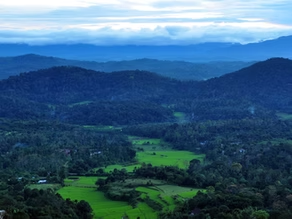
Different people have different tastes, of course, and this applies to travelers as well. You may not know it, but whether consciously or subconsciously, you and the people around you chose destinations according to their personality type and most of the time, consistently. In this blog, we cover 5 major types of personalities – Introvert, Extrovert, Adventurer, Historic, and Romantic – and what destinations you can visit according to your personality type, or if you’re in the mood to explore places you usually don’t go to. Here are 3 of the best destinations for each personality type! [1] Introvert Most people have an introverted side to them, but some are always or most of the time in that personality category. An introvert is characterized by the likely characteristics of wanting to be alone/with a smaller group, keeping to themselves, preferring quiet and less crowded places, and having low social batteries. All these features, while not necessary, make an introvert the perfect candidate for destinations with peace and fewer surprises as well as people. 1. Spiti Valley, Himachal Pradesh – This serene, high altitude destination is perfect for those looking for a quiet and beautiful getaway. Whether you’ll be sipping coffee in a cafe or trekking in the mountains, there is an abundance of peace and space for all travelers. 2. Ratnagiri, Maharashtra – Overlooking the Arabian Sea, this quiet and unexplored town in Maharashtra is surprisingly less known and the perfect destination for those looking for a getaway with less crowded beaches. 3. Kausani, Uttarakhand – Kausani is a quaint village situated in between mountains, offering majestic views and an unforgettable experience all in a quiet and unobtrusive setting and town. [2] Extrovert Extroverts by nature are, well, extroverted – they like putting themselves out there, meeting new people, being around others most of the time, and finding new experiences, all the time. These locations in India will help you make new friends, find new trinkets, explore places better, and have an unforgettable experience. 1. Kargil, Ladakh – Although this town is not as big as its famous counterpart Leh, Kargil offers the best combination of stunning views with bustling life in a small town where you can meet a host of different people and enjoy as a group. 2. New Delhi, Delhi – The city of Delhi is very well known, and its people are very friendly too. It is perfect for extroverts – with its many destinations, varieties of cultures and people, and different crowds in every corner, you’ll never run out of things to do and people to meet! 3. Dharamshala, Himachal Pradesh – This city, although quaint, is very well known to have a wide range of people in its midst – it is one of the ultimate hippie hotspots of India and you can meet people from a wide range of countries and walks of life here. [3] Adventurer Being addicted to an adrenaline rush is a very real thing, In India, there is never any shortage of adventures you can go on, but these places will give you the memories of a lifetime: 1. Bir Billing, Himachal Pradesh – The village of Bir, situated in the midst of mountains and a distance of two hours from Dharamshala, is very well known for the adventure sport of paragliding, although you can also trek and do a variety of other activities in this village. 2. Har ki Doon, Uttarakhand – Har ki Doon is a beautiful valley situated in between the Garhwal Himalayas of India and the valley is perfect for trekking. With this beautiful cradle as the destination, a trek to Har ki Doon will definitely boost your adventure spirit! 3. Manali, Himachal Pradesh – The city of Manali is perfect for all kinds of travelers, but especially suited to adventure travelers since it offers access to the thrilling Rohtang Pass trek, and has a variety of treks and destinations to offer – you can trek, do paragliding, and even bungee jump in this magnificent city. [4] Historic Whether you’re a historian or just a passionate learner, you’ll love these destinations. Although there is something to learn from and in every location, these places have a deep history rooted in them that will excite your inner academic and keep you in awe. India is a country with a long and expansive history, and nothing shows this better than these places. 1. Varanasi, Uttar Pradesh – Home to temples as much as 1000 years old, this city’s exquisite architecture and culture will stun you. There is something to learn at every corner, and the city is known to be one of the oldest in India. 2. Hampi, Karnataka – A UNESCO World Heritage Site, this city is known for its magnificent history spanning decades and well-preserved ruins. It used to be the wealthiest city of India hundreds of years ago and still boasts structures with histories that will astound you. 3. Ayodhya, Uttar Pradesh – The city is well known as the setting for the epic Ramayan and is believed to be almost 9,000 years old, previously the stronghold of the kingdom of Kosala around 2,000 years ago. There is much to explore and see in its jilted streets, old buildings, and protected sites such as the Kanak Bhavan, Hanuman Garhi temple, etc. [5] Romantic A romantic is not often vocal about their romantic characteristics – but all kinds just want a good swoon-worthy story and a beautiful place to spend with their soul mates. These destinations don’t all have a wonderful story, but they are destinations where there is just enough crowd to not get boring, and just enough peace to spend time together. 1. Imphal, Manipur – the city of Imphal has a history and an untouched charm –
Ultimate Guide to Tourist Activities during Coronavirus
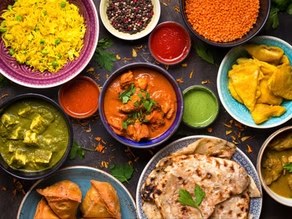
Coronavirus has made sure that we should be prepared for anything at all. Traveling has completely changed and will not be the same unless we get a worldwide vaccine that can be available to the masses. But since the wanderlust in us is never going to die and our want to travel and explore is always alive, we need to find new ways to tackle this paradox. In the previous few blogs, we’ve highlighted how to choose the right transportation, accommodation, and destination but what can we really do during our travel excursion? Social distancing has made it difficult to just get out of your accommodation and visit the place you’ve just searched for on the internet, you’ll have to make sure that the place is safe to visit and whether is it even open or not. This blog gives you a general idea of what places you can visit or include in your itinerary during a travel excursion with the norm of social distancing still in play. 1. Monuments The most popular tourist attractions in the world have always been magnificent monuments rich in heritage and culture. To explore this grandeur of unreal structures will be somewhat possible during social distancing as well. Most of the monuments have been allowed to open to the public under strict rules to ensure that the virus is kept in check. Only those monuments that are not in the containment zone have been allowed to open with regular sanitization drives and having sanitization points at each corner. One of the most iconic monuments in the world, Taj Mahal. To ensure more safety, no tickets will be sold on physical counters, only e-tickets or digital tickets are available for entering the monuments. This will ensure no contact and also help in limiting the visitors entering at one time by assigning specific time slots. Even the parking and cafes & kiosks will only accept digital payment instead of cash payments to ensure no contact. Entry and exit points have been marked separately by the monument authorities to ensure social distancing at each point, and a traveler will only be allowed to enter the premises after thermal checking of symptoms and hygiene check using sanitization points. Moreover, lights and video shows that created large crowds will be halted completely till further notice to ensure social distancing. 2. Adventure Activities Most of the adventure activities had only stopped when our country was in complete lockdown. When you think of most adventure activities, they generally involve a sense of social distancing since only a few people opt for them. These activities were not possible earlier only because no travelers were visiting due to the inability of traveling. Now, adventure activities are safe to choose and will have an even higher demand in the socially distanced world. Loved by most travelers, rafting is suitable for all adventure enthusiasts. Adventure activities are open in all the non-containment zones as with any other essentials. There has been a drop in travelers and thus people opting for these activities but they are completely safe and provide a respite to a person who has stayed home and washed utensils as their most adventurous activity of the day. I would recommend going for river rafting and camping by the river with a serene night trek in Rishikesh for this time but if you are planning to really get that adrenaline rush out, paragliding at Bir Billing is another great option. 3. Gardens/Nature Park Gardens have been opened a while back for the local public as well as tourists with the limitation of wearing masks at all times. Not adhering to wearing masks attracts a penalty that is applicable in any public area. Social distancing is a little hard to be maintained at these parks as they attract a lot of people every day. It will be advisable to not to visit these parks unless you are taking strict precautions and maintaining your distance from other visitors. Waterfalls are a traveler’s paradise and open for public Some nature parks have been opened in the country for the tourists but most of the wildlife sanctuaries have been closed for the safety of the animals as it is still unsure as to how this novel coronavirus affects different species. Also, since a lot of visitors drop by at these parks, it will be difficult to maintain social distancing while offering a great experience. Other naturally occurring tourist attractions like waterfalls, beaches, and mountains are open for visitors and are safe to visit but some of these attractions do expect a lot of visitors so do maintain your distance and wear a mask at all times. 4. Markets/Mall Whatever kind of traveler you are, you always need to find markets for shopping. It can be shopping for yourself or just souvenirs to take home but visiting a market is the most common practice when visiting a new place. Markets and malls have been opened by the government with just a few restrictions in place. Open markets are present everywhere in India and vendors love to bargain All shops must have sanitizers in place for hygiene safety and many have adopted to set ropes or barricades and marked spots on the floor to ensure social distancing. Open markets are much safer than closed shops and malls. Malls having confined closed spaces have a few more restrictions. Food courts in malls are closed, the temperature has to be maintained according to the government regulations(24-30 degrees), and a person with no symptoms will only be allowed in the mall premises. To be honest, malls are not really a necessity to be visited at all. Open markets are a much safer option and can be visited to buy essentials and other things. 5. Clubs/Pubs/Bars/Casinos Recently opened leisurely activities clubs, pubs, bars, and casinos can now be visited by
5 Traditional Toy and Craft Communities in India to Support Post the Chinese Ban
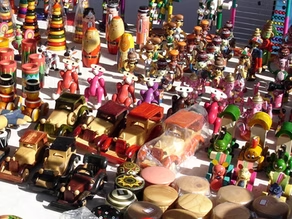
If you’ve been following the news, you’ll have heard about the discouragement of Chinese toys being placed by the Indian Government. Although not an official ban, India has made it virtually impossible for Indian importers to import Chinese toys by subsequently placing a stringent standard procedure that will demand a certain quality from Chinese toys – that more than 90% of Chinese toy producers will not be able to meet – along with a hiked 60% import tax on toys from China. India’s toy market is heavily dependent on its Chinese counterpart, with it being the largest toy importer from China (an estimated 70% of total toy exports by China are to India) and suffice to say, the Modi government’s latest reform against China over recent tensions will certainly hit the country hard, especially after the many bans and hikes placed in the past few months on Chinese products, of which we are very dependent on. What will it take for this recent hit back to be successful? A number of things, chief amongst which is the problem of supply and demand within India. Most toys in a majority of toy shops across India are Chinese made, with a small portion of traditional and miscellaneous toys being Indian made. Although Indian producers and handicraft communities have a headstart due to a major fall in demand (to around 10% of what it used to be) because of COVID-19, there is still a gap that needs to be filled as quickly as possible – Indian production of mass-made toys needs to be boosted, along with the encouragement of traditionally crafted toys. Here are 5 communities to support when you travel around India – these are all forms of crafts and arts that are facing extinction as they don’t provide the variety of toys usually demanded by customers, and the intricacies Chinese toys offer. 1) Channapatna Toys Made in: Channapatna, Karnataka, available at highway shops, toy stores, handicraft stores across Karnataka The beautiful range and variety in Channapatna craftsmanship Channapatna in the region of Ramanagara, Karnataka, is a town in South India known for its large but currently dwindling community of wooden toy crafters. The town is an attraction on the road from Bangalore to Mysore and called ‘town of toys’ in Kannada too. The crafters use mostly Milkwood and Ivory wood for the toys and eco-friendly dies as well which don’t harm children. The art form of Channapatna is said to have originated from Persia as the famous carving style and work on wood was revered and brought down to India through the Persian crafters. Channapatna style includes a variety of small and large toys, cooking utensils, miniature sets, even bags/bangles. The use of a pliable and well-structured wood makes it easier for handicrafts to make a variety of shapes and implements, although the skill is very hard to establish and perfect. Check out this amazing collection of stunning pictures of the art taken by Travel and Photography which will convince you to visit the town and see its craft! This art form was heavily affected by the pandemic as crafters are dependent on roadside toy shops and tourists across the state that halted suddenly. You can support these artists very easily if you’re located in Karnataka – just drive to your nearest highway/Kamat hotel, and you’ll find a variety of them on display. Buying these low-cost trinkets can go a long way to improve your living spaces, and bring livelihood to the crafters struggling due to the pandemic. 2) Rajasthani Puppets Made in: Mainly Jodhpur and Jaipur, Bhatt community, Rajasthan Rajasthani puppet makers use local softwoods, paint, and cloth for these colourful pieces of art The string puppets of Rajasthan are famous as ‘kathputhlis’ in the local language and the main cities where they are prepared are Jaipur and Jodhpur. The Bhatt community makes these puppets as well as performs with them, a traditional art form that has been prominent for many decades. India is one of the oldest civilizations in the world, also one of the first to start crafting and creating toys/implements and trinkets close to them: many existing techniques originate from Rajasthan, where the craft of puppets and dolls is highly respected. These puppets are usually made from traditional and natural cloth and dyes available within the state, and the shows are performed by the traveling Bhatt community. When you travel to Rajasthan, especially within the popular cities of Jodhpur and Jaipur, you’ll very likely spot these puppet shops and their crafters. Buy the dolls for a very additional flair to your space or for children, or even support the Bhatt community by witnessing a puppet show authentically in Rajasthan. The Third Eye Traveler has a great blog on exploring Rajasthan, on which basis you can plan your safe visit and explore this traditional craft. 3) Pachisi/Chausar Made in: parts of Mysore, North India, available online Pachisi is a fascinating and aesthetic ancient board game Pachisi is one of the many traditional Indian board games that are slowly being driven to extinction with the advent of mass production and variety demanded within a large range of toys. The board game, constructed of local textiles and marked with embroidery done by crafters, is a very important part of India’s history – the Mughals enjoyed the game tremendously, and multiple kings and dynasties are known to have hosted the game in their parlors. It is now not as widely known, particularly by the current generation due to modern changes in the industry. There are a few startups concentrating on reviving the Indian handicrafts and arts, based in multiple cities across India that are producing and employing communities for the crafting of this board game, but largely it is still relatively unknown. These board games, like Pachisi, Bhag Chal, Chauka Bara, and Pallunguli, all traditional and ages-old, crafted by
Ultimate Guide to choosing the perfect travel destination during COVID-19
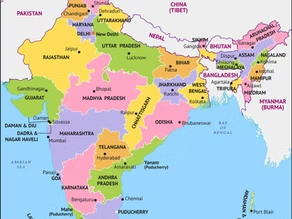
Coronavirus has surely changed how we think about life and how we think about traveling in today’s world but traveling will never really stop and our will to explore new places and culture will never diminish. The virus has somewhat started to decrease its spread and new ways to tackle and prevent its outreach has also come into effect. How we travel will surely change and is changing with new rules and regulations to maintain social distancing. Many states have started accepting tourists from other states. Though traveling will be restricted to the domestic circuit, it will help a lot of states to revive their economy as their main source of income was from tourism. Most of the leisurely travel will now be restricted to road travel by personal cars, buses, or caravans, this means, states that are nearby to each other will see a sharp rise in the tourists flocking in. Many states in India depend on domestic as well as international tourism for their major share of revenue collection. These states have lost a chunk of their revenue due to the Coronavirus and in a bid to make sure that they survive this pandemic, they are opening up borders to some tourists with some states having strict restrictions and some lenient. This blog has everything you’ll need to know about top tourist states in India and how they are tackling against Coronavirus to provide Tourism. 1. Tamil Nadu 2. Maharashtra 3. Uttar Pradesh 4. Karnataka 5. Rajasthan 6. Kerala 7. Goa 8. Uttarakhand 9. Himachal Pradesh 10. Delhi 1. Tamil Nadu The most visited state in India by both Indians and International tourists, Tamil Nadu is famous for the Indian heritage it has to showcase and has the most remarkable temples in the country dating back to 1000 years. The living tradition of culturally relevant music, dance, and art forms makes it a perfect destination for many tourists wanting to explore the roots of India and getting a sense of spirituality. Kanyakumari is one of the most visited cities in Tamil Nadu Traveling to Tamil Nadu: The state of Tamil Nadu has been affected adversely by the coronavirus pandemic. With almost 4 lakh cases and 7,000 deaths, it has recorded the second-highest number of cases in all of the Indian states, staying behind Maharashtra. The state of Tamil Nadu has made it mandatory for anyone trying to come in the state to have an e-pass issued by the local government for tracking each and every tourist that sets foot in the state. They say it will help them keep a record of how these people are affecting the situation of the pandemic and can take future decisions accordingly. Traveling from Tamil Nadu: If you’re living in Tamil Nadu and planning to travel to a different state for an excursion, the safest destination by road, for now, would be Kerala. Kerala has recorded around 60,000 cases till now and the graph has been moving slowly there. Kerala has made it mandatory to have a COVID-19 negative test, a minimum stay of 3 days, and booking of accommodation beforehand to enter the state of you’re a tourist. These are fairly easy if you’re will to trave is really strong. Other states like Karnataka and Andhra Pradesh are seeing a steep incline and can be less safe than Kerala. Check out Kuntala Banarjee’s blog on top places to worship in Tamil Nadu to get a better idea for a spiritual trip. 2. Maharashtra The second-most visited state by foreign visitors coming to India, Maharashtra is famous for having the mesmerizing mountain ranges on one side and the serene coastline on the other. Tourists flourish the state of Maharashtra for its century-old temples, the picturesque western ghats by the side, ancient and rich in heritage forts and palaces, the calming ambiance of the sea, and to witness the industrial advances made in our country. Mahabaleshwar is a popular hill station in Maharashtra that attracts people from all over India Traveling to Maharashtra: Maharashtra has had the majority of the effect of this novel Coronavirus. With over 7 lakhs individuals being affected by the virus and more than 23 thousand deaths, the state was in a state of helplessness at one point. There is still a mandatory e-pass requirement to travel to the state of Maharashtra but it will be lifted by the start of September 1, 2020. The central government had eased the restrictions but the state had stayed with the mandate of e-pass to keep a track of the cases in the state. Traveling from Maharashtra: The safest place to visit if you’re living in Maharashtra would be Goa. Goa has recorded around 15,000 cases in total and the rate of increase is fairly low. For individuals to enter Goa, they need to present their COVID-19 status to the state, in the form of negative COVID test, or go a 14-day home quarantine routine, or they can also opt for a COVID test at the point of entry into the state. Goa government has made it easy for tourists to enter the state. Maharashtra is in close proximity to Gujarat, Telangana, and Karnataka but the spread of the virus is not as controlled as that in Goa. They can be ideal tourist spots but one needs to be really cautious with traveling. Here’s a mini-diary to travel in Mumbai by Parnashree, check it out to read about her awesome journey and recommendations. 3. Uttar Pradesh When it comes to the most attractive place of interest in India, if not the world, the Taj Mahal will surely top the list. Along with the Taj Mahal, there a number of historically important sites in Uttar Pradesh along with numerous religiously significant temples and other pilgrimage sites. Holiest city of Varanasi that sees tourists flock in thousands every day is another
Travel places that won’t burn a hole in your pocket
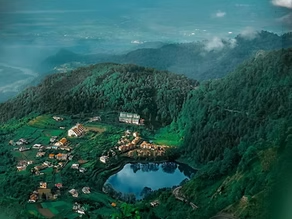
We live in a wonderful world that is full of beauty, charm, and adventure. There is no end to the adventures we can have if only we seek them with our eyes open. – JawaharJawaharlalal Nehru Traveling is one of the most exciting and thrilling activities that one can do to let their hair down. Traveling has a positive effect on your physical and psychological self and also changes you in so many ways that you yourself do not realize. A study from Cornell University has also shown a direct correlation between increasing happiness and a vacation. Not just going on a trip but planning a trip also makes you happy. Not just this, it also helps you understand various cultures and makes you a better socially developed person. 5 Scientifically Proven Health Benefits of Traveling We all had some marvelous travel plans in 2020 but unfortunately due to COVID 19 all our plans are put on a hold and many of us want to avoid traveling not just because of safety reasons but also financial constraints. But, what if we tell you that there are some breathtaking destinations in India that won’t even burn a hole in your pocket? Isn’t it a win-win situation. Let’s have a look at some cheap and yet amazing travel destinations in India that we can visit on a low budget. 1. Amritsar, Punjab A trip to Amritsar can rejuvenate us in many ways. It is one of the most spiritual cities in the country and is the current largest urban area in Punjab. One of the main reasons to visit Amritsar is obviously ‘Golden Temple’, a visit to this marvelous Sikh shrine makes you feel free from your problems and hustle and bustle of life. You can also have langar i.e. communal meal. Trust us no 5-star hotel can beat the taste of food served over here. You can also volunteer to help at the shrine. Not just the Golden Temple, you can also attend the ceremony at Wagah Border. To all the foodies, this city is a treat for you all. All the dhabas serve extremely delectable food. Other attractions that you can also visit are Jallianwala Bagh, Baba Atak Tower, Gobindgarh Fort, and Durgiana Mandir. To know more about this lovely city have a look at this superb blog. The marvelous Golden Temple. 2. Nainital, Uttarakhand Lush green valleys, breathtaking lakes, adventurous activities: doesn’t all this sound like a perfect travel destination. Yes, it is and Nainital is a perfect combination of all three of them. Nainital is a small town in Uttarakhand. It is named after the Hindu goddess Naina Devi and one of the main attractions in the town is Naina Devi Temple. It a beautiful temple located at the upper end of the marvelous and attractive Nainital Lake. Apart from the temple, the mall road of Nainital is one of the main shopping and food centers in the town. You will find the cutest and the best handicrafts over here. Another marvel in this town is the snow viewpoint that offers a breathtaking view of the Himalayas and the fun part is that you can also have a ropeway ride from here. Other places that will make your heart crave for more beauty are Eco cave gardens, Land’s end, Himalayan viewpoint, and St. John Wilderness Church. Night view of Nainital city. 3. Kodaikanal, Tamil Nadu Famously known as the city of hills, it is a winsome town in the state of Tamil Nadu. The town is a treat for all nature lovers as the whole town is abundant with green valleys, majestic waterfalls, and perfectly transparent lakes. The town is a perfect place to have a relaxing, cheerful, and whoopee experience. It is also home to one of the most lovely waterfalls in the country. You can visit Bear Shola Falls, Thalaiyar Falls, and Silver Cascade Falls for some breathtaking views. Another interesting location is the Green Valley View or Suicide point. The viewpoint offers an enchanting view. To get here, you need to pass through misty and magical woodlands that make it no less than a magical adventure. Other places that you can visit are Pillar Rocks, Kodai Lake, Coaker’sare walk, and Kukkal Caves. For more information about this hill station, give a read to this blog. Lovely waterfall at Kodaikanal. 4. McLeod Ganj, Himachal Pradesh Looking for some great time and peace of mind then this is the right place for you. Located in Dharamshala, it is also known as ‘Little Lhasa’ because of its large population of Tibetans. It is well known for its monasteries, temples, waterfalls, lakes, and Tibetan culture. Bhagsunag waterfall is one of the top tourist attractions and is well known for its tranquil and serene environment. You can also take a dip in the chilly and freezing water. Another gem that you definitely do not want to miss is Dalai Lama’s temple also known as Namgyal Monastery. It is the largest Tibetan temple in India and attracts many tourists from all over the globe. To all the foodies, the stalls over here serve the best momos and Maggi and we bet you don’t wanna leave the scrumptious food. Other places that you can explore are Dal Lake, St. John’s church, and Masroor temple. The entrance of Dalai Lama Temple. 5. Pondicherry This place is not less than a paradise for anyone. From being a party hub to a spiritual center to a tranquil town, this city has got it all. With its golden beaches, crystal blue skies, quirky cafes, and flamboyant streets it has made a place in everyone’s heart. Also known as Puducherry, was a French colony and later on became an Indian Union Territory. “Puddu,” as the locals call it, was not a favorite tourist spot for a long time, but it started sparkling its magic over the tourists almost a
7 Places In India That Are A Photographer’s Paradise!
“Photography is a way of feeling, of touching, of loving. What you have caught on film is captured forever… It remembers little things, long after you have forgotten everything.” — Aaron Siskind We are certain everyone would agree that the above quote captures the essence of photography perfectly. Photography adds so much meaning to our lives. It allows us to share our life and experiences in more profound ways. Moreover, it also helps us develop and evolve as human beings. Lastly, the art of photography has the capability of bringing you so much joy and pleasure. In this everchanging fast-paced world, there is something very satisfying about slowing down and just focusing on what is in front of you. Well, we have compiled a list of 7 intriguing as well as mesmerizing places in India that would surely feed your artistic and creative bug. 1. Leh-Ladakh Ladakh is perhaps one of the most stunning places in India, owing to its dazzling beauty. Although the climate is harsh for most parts of the year, the generosity and warmth of the people more than make up for it. The silence of the monks at Buddhist monasteries that dot the breathtaking landscape gives this region an advantage over all others in India. With elaborate carvings, a conglomeration of values, a tranquil environment, and exquisite artifacts as well as relics, these Buddhist centers, will surely leave you mesmerized. Enjoy the overcast, windy weather while exploring the different picturesque locations that define the culture of this place. It is truly a heaven on Earth. How to reach:- The most convenient way of traveling to Ladakh is by air. The nearest airport is Kushok Bakula Rimpochee Airport, located in Leh. The other way of reaching this place is by road. Two different routes lead to Ladakh- one from Srinagar and the other from Manali. However, a crucial point to remember is that both these roads become inaccessible from October/November to May. The ideal time for photography:- The perfect time for visiting Leh Ladakh is from July to September. First trip to Leh-Ladakh? Do check out Sandeepa & Chetan’s blog on this gorgeous place. 2. Varanasi Also known as Kashi (City of Life), Varanasi has always been a hotspot for travel photographers. One of the oldest living cities in the world, this sacred place has been attracting tourists for hundreds of centuries. Renowned author Mark Twain described it as “older than history, older than tradition, older even than legend.” The Ghats of Varanasi have always had a certain allure to them. A home to devotees searching for holiness and moksha (salvation), the approximately 80 ghats that border the Ganges are the heart and soul of the town. We promise you, the city and its heritage are bound to leave you wonderstruck. Moreover, the unique spirit of this region will undoubtedly remain with you long after you leave. How to reach:- Varanasi has two railway stations, the Kashi Junction and the Varanasi Junction, both of which are well-connected to the major cities in India. It is also accessible by air as well as by roads. The ideal time for photography:- The perfect time for visiting Varanasi is during winters i.e. from October to February. To know more about this beautiful city, do check out Puspendra Gautam’s informative blog. 3. Khajuraho If you are looking for a place that is an amalgamation of knowledge and aesthetic, then Khajuraho in Madhya Pradesh is the perfect destination for you. Words fail to describe the charm and elegance that this region holds. One of the grandest art structures in the country, the Khajuraho group of temples, is an excellent example of Indian architecture and heritage back in the ancient era. The eloquent portrayal of human emotions and feelings by the sculptures not only leaves everyone spellbound but also leaves them begging for more. The enchanting beauty of these temples lies in their elaborate and intricate carvings, which depict scenes from everyday life. This quaint town is a classic example of India’s rich cultural legacy. How to reach:- Khajuraho has excellent connectivity with major cities in India by road. It is also accessible by air. The Khajuraho Airport has regular flights operating from Delhi and Varanasi. Furthermore, you can also travel to Khajuraho by train. The ideal time for photography:- The perfect time for visiting Khajuraho is during winters i.e. from October to February. Want to know more? Do read Anna Phipps’s amazing blog. 4. Pelling Pelling is an ideal destination for photographers, nature enthusiasts, bird-watchers, and serenity seekers. Offering jaw-dropping views of the Himalayas and the snow-capped Kanchenjunga, Pelling, in Sikkim, is a gorgeous town with perfect misty, cloudy weather – all the things that an excellent Indian holiday wishes to have. With charming houses built atop wooded ridges, this hill town is not only surrounded by panoramic natural forests but is also home to stunning heritage structures like ancient monasteries as well as breathtaking waterfalls like the Kanchenjunga falls and the Changey Waterfall. If you get a chance, do visit the annual Khangchendzonga Festival. It sees activities like kayaking, trekking, traditional sports, and birdwatching. In addition to this, the festival also witnesses a flower exhibition, which is a colorful and vibrant affair. All in all, this scenic town is a perfect holiday destination for scenery lovers and adventure buffs. How to reach:- With no railway station or airport close by, reaching Pelling isn’t an easy task. The best way to reach Pelling is by taking a bus or hiring a taxi since it has excellent road connectivity with other cities in Sikkim. The ideal time for photography:- The perfect time for visiting Pelling is during winters from February to July. However, if you would like to capture the snowy landscapes, November to January is when you should travel to Pelling. Do give Jade’s blog a read to know more about this stunning place. 5. Diu Having an old-world charm and
Airport Procedures For Travel From India To UAE During The Covid-19 Pandemic
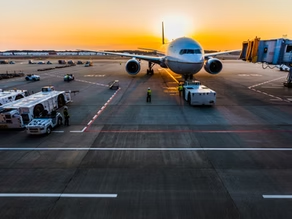
Normally a visit to another country involves that small sense of excitement in anticipation of what is to come. However, during these tough times, traveling during the Covid-19 pandemic is an experience that needs to be tackled with the utmost caution, adhering to all possible safety measures to avoid contracting the virus. Airports are, after all, a hotbed for huge gatherings, compounded by the fact that passengers might even be in transit to a third destination. There is a lot of confusing, and often contradictory, information out there regarding the procedures to be followed as well as the availability of flight tickets, things to be done, and even the list of nationalities permitted to enter certain countries. This blog details my journey from Chennai, India to Dubai, UAE, on the 19th of August, 2020. Pre-travel to-do List The very first thing that you need to ensure is the availability of flights to your destination. A large number of private carriers have temporarily halted their services to and from a list of destinations, especially in those countries that have been hit badly by the pandemic and see a large number of fresh cases to this day. There were only a couple of carriers available from Chennai to the UAE. Initially, I’d booked an Air Arabia flight to Sharjah, but that got canceled within the next couple of days. I ended up booking an Air India Express flight to Dubai instead, which was part of the Vande Bharat Phase V scheduled list of flights. Even before that, however, make sure the type of passport and visa(and procedures for the same) are in the permitted list, as in these turbulent times a lot of restrictions are in place. In fact, Indian passengers seeking to travel to the UAE on Visit Visas were not permitted until 15th August, and the Vande Bharat scheme was specifically for UAE Residence Visa holders. Visa On Arrival facility still remains disabled to date, so ensure that you get a Visa arranged for via a travel agent either in the country of your residence, or a reliable source in the UAE, which I personally recommend for a hassle-free process. Check with your country’s embassy in the UAE on social media, or look for a clear, explicit news article that states that your particular passport and visa combination is eligible to travel, before booking tickets and making arrangements. You need to get a Covid-19 test done no more than 96 hours before the departure of your flight according to UAE regulations. This test has to be done from one of the government-accredited testing centers of your country of departure, or from the list of PureHealth screening facilities(curated by the UAE). Produce this negative test result on arrival in Dubai. It is also recommended that Visit Visa holders procure a Medical Insurance for Covid-19, lasting the duration of your stay at the UAE, for an additional charge of around AED 200. Indian Immigration officials actually asked me to produce this Medical Insurance, so be sure to purchase one to avoid any problems before your flight. I would advice taking printouts of all relevant travel documents that you may be asked to produce at your departure port, just so that you can prevent your phone from being passed around. Every single touch or contact is undesirable at this point! Purchase a few masks, a bottle of sanitizer, and if you want to err on the side of caution, a hazmat suit. Descriptions of N-95 masks being hard to breathe in are wildly exaggerated in my opinion. I used one for the entirety of my journey, right until I reached home, and faced no problems whatsoever breathing, at any single point of time. Face shields are provided before the flight takes off(we’ll get to that in a bit). I did not carry gloves with me, as according to a relative who works in the medical field, most people do not know the right way to take off their gloves and end up defeating the whole purpose behind wearing them in the first place. Airport Procedures Social distancing wasn’t really being actively enforced at the Chennai airport. There was a distinct lack of crowd in the airport though, which should help you do your part. Before you even enter the airport to check-in your baggage, a small form is provided, where you fill in basic contact information and your address in Chennai(carry your own pen for this). The line was slow-moving though, and the officer was perfectly fine with taking his own sweet time while checking the details and permitting passengers to proceed onward. Not to mention the fact that he couldn’t be bothered to pull his mask above his nose, thereby, once again, defeating the whole purpose behind wearing protective gear. You are asked to display the front page of your passport shortly afterward, to a contactless desk, before you make your way to check-in your baggage. Immediately, I noticed that the airport was infinitely less crowded and quieter, perhaps owing to all the shops being closed. The procedure here does take a little bit longer than usual, but they have a transparent barricade in place between yourself and the check-in officer who issues your boarding pass. The officer here was careful in checking and ensuring that you have all the relevant, aforementioned documents on your person, including your Medical Insurance before she issued my boarding card. Near Baggage Check-In, Chennai International Airport I made my way to the Immigration counter, where lines were non-existent and the counters, empty. Once again, the Immigration officer was more inquisitive than usual, but all that being done, it was business as usual. Security Checks were smooth and decently quick, owing once again to the lack of the usual airport traffic. I frequently used the hand-sanitizer after touching a foreign object, and I recommend that you do the
What is Virtual Travel and Should you care?
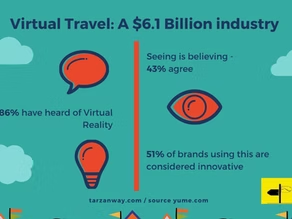
Over the past couple of decades, technology has permeated and disrupted all facets of our life. The travel experience has been completely changed because of technology just the same. From the ability to navigate oneself using GPS, pre-booking flights, and hotels using the internet and sharing one’s travel experience in real-time with friends and family using social media. All of these have been made possible because of the advancement of technology. One of these latest advancements that aim to replace or at least complement the travel experience is Virtual Travel. Virtual Travel: A Brief Virtual Travel In layman terms, virtual travel is a digital simulation of an attraction or a destination through immersive high definition photos and videos. One of the most popular methods of experiencing Virtual Travel is through the use of VR headsets and 360° Video. With about 90% of the global economy on lockdown, virtual travel-based experiences are in a unique position to help satisfy the wanderlust of travelers around the world. Providers of these experiences have experienced a significant surge in users ever since the lockdown went into effect. The entire virtual travel market is estimated to be worth around $6.1 billion in 2020. Travelers have flocked to this technology to experience exotic locations like Machu-Pichu and museums like the Smithsonian alike. Advantages of Virtual Travel:- Accessibility:- All you need to be able to experience the wonders of the Taj Mahal and immerse yourself in the beauty of Mona Lisa virtually is a phone that doubles as a VR headset and the will to see the wonders of the world. This technology has very rapidly made these experiences widely available to everybody regardless of their financial status or their physical capabilities. Try it before you buy it:- Virtual Travel experiences created by tour providers allow travelers to immerse themselves in the beauty and culture of a destination unparalleled to what photos and videos can offer. It allows travelers to make more informed decisions before paying to visit a destination in person. Better for the Environment:- If the experience is immersive enough to satisfy the wanderlust of casual travelers, virtual travel can provide the unique advantage of being able to significantly reduce the carbon footprint of the tourism industry and solve the problem of over-tourism. Independent of Space and Time:- Virtual Travel can be used to create experiences that would simply be impossible to replicate in real life. This technology can be used to create experiences that would allow us to experience a culture in a completely different light. Eg. A virtual experience in Paris in the late 1800s as the Eiffel tower is being built or an experience or an experience based in ancient Rome where you experience gladiators fight along with 50,000 other spectators cheering. Following are some of the best-rated Virtual Experiences:- The Louvre Museum, Paris Known as one of the most iconic museums on the planet the Louvre offers a variety of tours of its exhibits ranging from Egyptian artifacts to paintings from the renaissance period, all from the comfort of your couch. The Louvre, Paris, France The Smithsonian Museum, Washington, D.C. Located in the heart of Washington D.C, The Smithsonian National Museum of Natural History has the world’s largest natural history collection in the world. Its expansive collection of artifacts makes it an attraction that attracts tourists and locals alike. The virtual experience offered by the museum is one of the most highly rated due to its high fidelity and easy to navigate interface. Taj Mahal, Agra One of the 7 wonders of the world, The Taj Mahal built by Mughal emperor Shah Jahan to house the tomb of his wife, is by far the most famous tourist attraction in the country. Various virtual experiences offered to tourists allow them to explore 22 different sites on the premises through 360° video and narrated mini-movies. Taj Mahal, Agra, India Amer Fort, Jaipur The fort located in the pink city Jaipur is famous for its cobbled pathways and magnificent gateways. The Hindu-Muslim influences are apparent from the design of the fort and the serene views Maota Lake make it a must-visit for anybody looking to explore the culture and heritage of Rajasthan. In order to revive interest in the tourist attraction present all over Rajasthan, the government has launched a variety of virtual tours that allow you to experience these attractions from your laptop browser. Cons:- Lack of Immersion:- There is a stark difference between using virtual travel as a means to narrow down your travel and the virtual experience being all there is to it. The virtual experiences are limited by technology and are not as immersive as required and are fairly limited. Hence, do not satisfy the need to explore a space that a tourist usually has. Uncomfortable:- The experiences are based on the virtual reality technology which itself is in its nascent stages and still has its own sets of bugs and kinks. The VR headset used for these experiences is often bulky and uncomfortable. Therefore hinders the experience of the traveler. Due to the clunky nature of video presentations if even leads to nausea if worn for a longer duration. Lack of Social Interaction:- As described by travelers over the years “ Travel is inherently a social experience”. Whether it’s getting to know the history of a city through the personal anecdotes of a native or our parents enjoying the vacation significantly more by seeing their kids discover the wonders of the world, social interactions form an irreplaceable part of Travel. In conclusion, I’d just like to say that virtual travel and VR as a technology, both show tremendous potential and one day might even be immersive enough to serve as a replacement for traveling in the real world but for now, its role is limited to being an effective placeholder.
India’s Strained Foreign Relations With China And How It Impacts Tourism
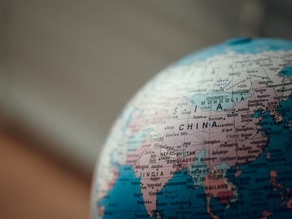
Since independence, all of India’s successive governments have worked on building better relations, particularly in trade, with its neighbors and other countries. This policy was pushed on more with the advent of the Modi government in 2014, with a major focus placed on creating better and stronger ties with other countries. In the past few months, however, India has been facing a major challenge in its northern borders with China, an issue that started in May and continues still, getting more and more worrisome. Historically speaking, this relation has always been rocky at best, but placed mostly in the backburner for the sake of trade, because India does, after all, trade goods worth millions with the country. With the rising border tensions concentrated in the Ladakh region and the death of Indian soldiers due to a face-off with Chinese troops, there has been a wave of nationalism that has affected the country. With a prominent boycott of Chinese goods and software still taking place within the country, the process is slow but successful. This wave of nationalism has brought to attention the other fragile relations India is dealing with consistently with its neighbors like Nepal, Tibet, Sri Lanka, Bangladesh, etc. that can, in fact, be traced back to China. What does this have to do with the tourism industry? It’s important to keep in mind, firstly, that a large number of countries in Asia, predominantly smaller ones, have debts to China and India, two of the fastest-growing economies in the world who can afford large loans to other countries, which establishes them as two giants, not just economically but also through land space, in Asia – relations between the two affect a number of countries. Secondly, and most importantly, multiple countries in the continent are dependent on tourism as a revenue generator, for example, Maldives, Indonesia, Thailand, Bhutan, India, etc. They are dependent financially and/or for employment on tourism, whether it is a big chunk or a small sector. With these facts established, let’s get into the 3 most important ways that China-India relations can affect the tourism industry, either directly or indirectly. 1. Border tensions and land disputes The beautiful but currently dangerous borders of India China is, of course, one of the countries India is currently having a land dispute with in terms of claimed territory and borders, concentrated towards the border in Ladakh which India shares with Tibet, officially a part of the republic. Did you know, however, that India is also facing land disputes with Nepal and Pakistan? the two countries earlier released new political maps of their countries which claimed regions in India as theirs, with Pakistan claiming the whole of Kashmir and sections of Gujrat as a part of the country and Nepal releasing a new map with towns and sections of Uttarakhand (Kalapani, Limpiyadhura, and Lipulekh areas) as Nepal’s territory. Many political experts believe both had been influenced in some way or the other by the Chinese government to carry out these changes. Whether this is correct or not, the fact is that these map changes are not only complicating relation issues for India but also hinting to more disagreements that can cause land loss. While it is unlikely these maps will be accepted, it still means that the land being fought over may just get more dangerous and even cordoned off for tourists. Ladakh, Kashmir, and Uttarakhand are some of the most tourist-heavy destinations in India and an escape from the densely populated southern cities for many. These issues, whether remaining stagnant or becoming more problematic, will cause many problems to the tourism industry. Small vendors and shops in the areas dependent on tourism, already hit hard enough by COVID-19, will suffer even more due to these border issues. Potential Problems: A hit to tourism in the areas where there are land disputes with other countries, mainly Ladakh, Uttarakhand, Kashmir, and Himachal Pradesh. This can cause a hit to revenue, increase in danger and possibly lesser enthusiasm in travelers to these spots. 2. The Indus Water treaty The mighty Indus River The Indus river is one of the main sources of water for many states of India. It originates in Tibet, which is a part of the Republic of China, and runs in Pakistan, India, and Tibet. The treaty has, for years, made sure of fair usage and distribution of the water between the countries, mainly India and Pakistan, who have upheld the treaty now for close to 60 years. Next to the town in Tibet closest to India, there is a giant hydroelectric dam built on the Sengge Zangpo River (Indus), just 80 km from Demchok, a Ladakhi village that sits on the undefined Sino-Indian (China-India) Border. China has, in the last few years, rapidly ramped up development along the river, with satellite images showing multiple projects that have sprung up in Tibet funded by the Republic. Although the government says these are for faster development of the region, multiple experts share concerns about the nature of the development. Many say this is one way China is trying to impact India – and this will leave a huge scar. The river runs through Ladakh and provides water for irrigation and other purposes to provinces in Himachal Pradesh, Rajasthan, Haryana, and Punjab. These states will be directly impacted, and so will tourism – with the flourishing tourism industry in Himachal and Ladakh, as well as the role of water sports in these attractions, any changes made by China such as controlling the water source through built dams, redirecting within Tibet, or more dams and hydroelectric projects that can majorly impact the water flowing into India will hit these states hard in multiple industries. Potential problems: Any control or hold back of the river to even the smallest extent can drastically hit infrastructure based along the river and in the states hit the hardest. Agriculture will be hit